
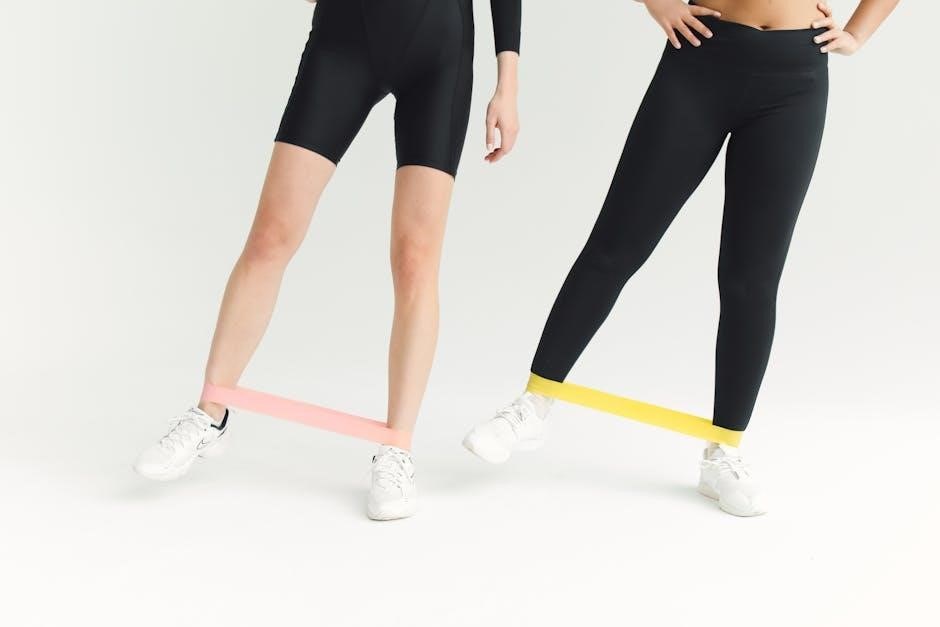
Understanding IT Band Syndrome
Iliotibial band syndrome (ITBS) frequently affects runners and cyclists, causing pain on the outer knee; diligent warm-ups and cool-downs are crucial for prevention.
IT band issues aren’t inherently caused by running, but improper form or overexertion can contribute to discomfort and potential injury, requiring focused rehabilitation.
Flexibility is key, and while often overlooked, IT band stretches are vital for walkers, runners, and cyclists to maintain optimal lower body health and function.
What is the IT Band?
The iliotibial (IT) band is a thick band of fibrous tissue that runs along the outside of the thigh, extending from the hip to just below the knee. It’s not a muscle itself, but rather a reinforcement for the thigh muscles – assisting in leg stabilization during movement. Often confused with information technology, the IT band plays a critical role in lower body mechanics.
Its primary function is to prevent the knee from bending inward during activities like running and cycling. While essential for stability, the IT band can become tight and inflamed, leading to IT band syndrome (ITBS). This tightness isn’t usually within the band itself, but rather in the surrounding muscles like the glutes, TFL (tensor fasciae latae), and hip abductors.
Understanding its role is crucial for effective treatment and prevention, emphasizing the importance of addressing muscle imbalances and incorporating appropriate stretching and strengthening exercises into a routine.
Causes of IT Band Syndrome
IT band syndrome (ITBS) typically arises from repetitive friction between the IT band and the lateral femoral epicondyle (the bony prominence on the outside of the knee). This friction causes inflammation and pain. Several factors contribute to this, including improper biomechanics, muscle imbalances, and inadequate warm-up or cool-down routines.
Common culprits include weak glutes and hip abductors, leading to increased stress on the IT band. Overpronation (inward rolling of the foot) can also exacerbate the issue. Increasing training intensity or mileage too quickly, without allowing the body to adapt, is a frequent trigger.
Poor running form, such as overstriding or running on uneven surfaces, can also contribute. Addressing these underlying causes – through targeted exercises and proper technique – is essential for effective management and prevention of ITBS.
Common Symptoms of ITBS
The hallmark symptom of iliotibial (IT) band syndrome is pain on the outer side of the knee. This pain often begins gradually during activity, such as running or cycling, and may worsen with continued exertion. Initially, it might subside with rest, but as the condition progresses, pain can become more persistent.
Individuals with ITBS frequently experience a burning or stinging sensation just above the knee joint. Tenderness to the touch along the IT band is also common. Pain may radiate up the thigh or down the lower leg. Some may notice clicking or snapping sensations.
Symptoms can vary in intensity, ranging from mild discomfort to sharp, debilitating pain that limits activity. Early recognition and intervention are crucial to prevent the condition from becoming chronic and hindering athletic performance.
Stretching Exercises for IT Band Relief
Targeted stretches, both static and dynamic, are essential for alleviating IT band syndrome discomfort and restoring optimal flexibility and range of motion.
Static IT Band Stretches
Static stretches involve holding a stretch in a challenging but comfortable position for a period, typically 30 seconds, to improve flexibility over time. These are best performed after a warm-up or post-exercise when muscles are more pliable.
Focusing on the IT band directly can be tricky, as it’s a thick band of tissue; static stretches often target surrounding muscles to indirectly relieve tension. Consistent application of these stretches is vital for noticeable improvements.
Remember to breathe deeply throughout each stretch, avoiding bouncing or forcing the movement, which could lead to injury. Prioritize proper form over achieving maximum range of motion initially, gradually increasing intensity as flexibility improves.
Standing IT Band Stretch
To perform this stretch, stand with your affected side facing a wall or stable support. Cross the leg furthest from the wall behind your supporting leg. Gently lean towards the wall, keeping your feet flat on the floor and your back straight.
You should feel a stretch along the outside of your hip and thigh. Hold this position for approximately 30 seconds, breathing deeply throughout. Avoid bending your supporting knee excessively, maintaining a slight bend for comfort.
Adjust the distance from the wall to modify the intensity of the stretch. A greater distance will increase the stretch, while a shorter distance will lessen it. Repeat this stretch 2-3 times on each side, ensuring consistent form.
Lying IT Band Stretch with Towel
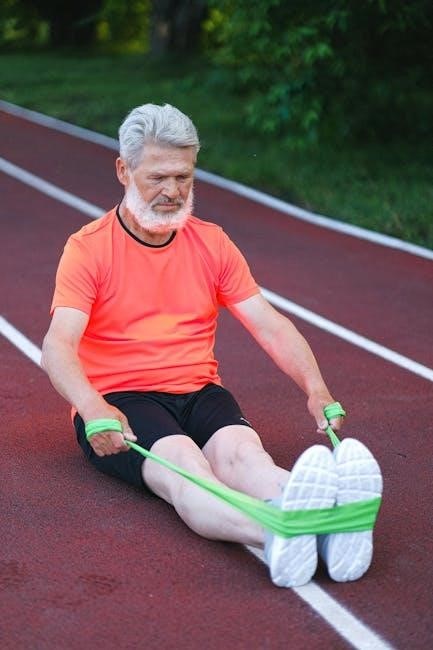
Begin by lying on your back with your legs extended. Loop a towel or resistance band around the foot of your affected leg. Gently pull the towel towards your head, crossing your leg over your body. Keep your shoulders flat on the floor throughout the exercise.
You should feel a stretch along the outer thigh and potentially down towards the knee. Adjust the angle of your leg to find the most comfortable and effective stretch. Hold this position for 20-30 seconds, focusing on deep, controlled breathing.
Repeat this stretch 2-3 times on each side. This stretch can also be performed with a cord, providing a different sensation. Remember to listen to your body and avoid pushing beyond your pain threshold.
Dynamic IT Band Stretches
Dynamic stretches prepare your muscles for activity, unlike static stretches which are held. These movements increase blood flow and range of motion, crucial before exercise. Incorporating dynamic stretches into your warm-up can significantly reduce the risk of IT band syndrome.
Focus on controlled movements, avoiding bouncing or jerking. These stretches should feel fluid and natural, mimicking the motions you’ll perform during your workout. Prioritize quality over quantity, ensuring proper form throughout each repetition.
Dynamic stretches are particularly beneficial for runners and cyclists, helping to activate the muscles surrounding the IT band and improve overall lower body mechanics. Consistent implementation is key for preventative care.
Side Lying Leg Raise
To perform this stretch, lie on your side with your legs extended and stacked. Gently lift your top leg towards the ceiling, keeping your core engaged and your body in a straight line. Avoid rotating your hip or leaning forward or backward.
Focus on controlled movement, raising your leg to a comfortable height and slowly lowering it back down. Repeat this exercise 10-15 times on each side. This dynamic stretch targets the hip abductors and external rotators, which play a role in IT band function.
Proper form is essential to prevent strain or injury. If you experience any pain, stop immediately and consult with a healthcare professional. This exercise is a valuable addition to a dynamic warm-up routine.
Standing Leg Swings

Begin by standing tall with your feet hip-width apart, holding onto a stable surface for balance if needed. Gently swing one leg forward and backward in a controlled motion, keeping your core engaged and your back straight. Avoid jerky movements or overextending your leg.
Focus on a smooth, pendulum-like swing, gradually increasing the range of motion as you warm up. Perform 10-15 swings on each leg. This dynamic stretch helps to improve hip mobility and flexibility, preparing the IT band for activity.
Remember to maintain good posture throughout the exercise and avoid any pain. Leg swings are an excellent component of a pre-exercise warm-up routine, enhancing performance and reducing injury risk.

Complementary Stretches for ITBS
Addressing ITBS requires a holistic approach; stretching the piriformis and calf muscles alongside the IT band provides comprehensive support and relief from discomfort.
Piriformis Stretch (Figure Four Stretch)
The Piriformis Stretch, also known as the Figure Four Stretch, is a valuable complementary exercise for IT Band Syndrome, targeting the piriformis muscle which can contribute to IT band tightness. This stretch can be performed in a couple of different ways to maximize its effectiveness.
Method 1 involves lying on your back with knees bent and feet flat on the floor. Cross one ankle over the opposite knee, forming a “figure four” shape. Gently pull the thigh of the uncrossed leg towards your chest until you feel a stretch in your hip and glute.
Method 2 maintains the figure four position, but instead of pulling the thigh, you hold the opposite leg while maintaining the figure four position. Both methods should be performed on both legs, finding a comfortable position and holding the stretch for approximately 30 seconds.
Performing the Piriformis Stretch ─ Method 1
To begin Method 1 of the Piriformis Stretch, lie comfortably on your back with your knees bent and feet flat on the floor. This foundational position ensures proper alignment and maximizes the stretch’s impact on the piriformis muscle, indirectly benefiting the IT band.
Next, cross your right ankle over your left knee, creating the characteristic “figure four” shape. Ensure your right foot is flexed to enhance the stretch. Gently, but firmly, pull your left thigh towards your chest, keeping your lower back pressed into the floor.
You should feel a noticeable stretch in your right hip and gluteal region. Hold this position for 20-30 seconds, breathing deeply. Repeat the stretch on the opposite side, crossing your left ankle over your right knee. Consistency is key for optimal results.
Performing the Piriformis Stretch ─ Method 2
For Method 2 of the Piriformis Stretch, begin by lying on your back with knees bent and feet flat. Cross your right ankle over your left knee, forming the figure four position, similar to Method 1. This establishes the necessary leverage for a targeted stretch.
Instead of pulling the thigh towards your chest, reach through the space between your legs and clasp your hands behind your left thigh. Gently pull your left thigh towards your head, maintaining a flat lower back. You’ll feel a deeper stretch in the right hip.
Hold this position for 20-30 seconds, focusing on deep, controlled breaths. Repeat on the opposite side, ensuring equal attention to both legs. This variation offers a different angle and intensity to address piriformis tightness effectively.
Calf Stretches
Calf tightness significantly impacts IT band function, making calf stretches essential for comprehensive ITBS management. Addressing calf muscle restrictions helps restore proper biomechanics and reduces strain on the IT band. Two primary calf stretches are particularly beneficial: the Gastrocnemius and Soleus stretches.
Integrating these stretches into your routine, alongside IT band-specific exercises, provides a holistic approach to recovery and prevention. Remember to perform these stretches gently and avoid bouncing, focusing on a sustained, comfortable stretch. Consistent stretching is key to long-term relief.
Prioritizing calf flexibility complements other IT band treatments, contributing to improved lower limb alignment and reduced risk of re-injury. These stretches are easily incorporated into warm-up and cool-down routines.
Gastrocnemius Stretch
The Gastrocnemius stretch targets the larger, more superficial calf muscle. To perform this stretch, stand facing a wall with one leg extended straight back, heel firmly planted on the ground. Lean forward, bending your front knee, until you feel a stretch in your upper calf.
Maintain a straight back and avoid locking your knee. Hold the stretch for 20-30 seconds, repeating 2-3 times on each leg. This stretch is most effective when the knee is fully extended, isolating the gastrocnemius muscle.
Focus on a deep, controlled stretch, breathing deeply throughout the exercise. Proper form is crucial to avoid injury and maximize the benefits of the stretch for IT band health.
Soleus Stretch
The Soleus stretch focuses on the deeper calf muscle, located beneath the gastrocnemius. Begin by standing facing a wall, placing one foot slightly behind the other. Bend both knees, keeping your back heel on the ground. Lean forward until you feel a stretch in your lower calf.
Unlike the gastrocnemius stretch, maintain a slight bend in your back knee during this exercise. This isolates the soleus muscle. Hold the stretch for 20-30 seconds, repeating 2-3 times on each leg.
Remember to breathe deeply and maintain a controlled movement throughout the stretch. Addressing both calf muscles is vital for comprehensive IT band care and injury prevention, promoting flexibility.

Strengthening Exercises to Support the IT Band
Strengthening glutes and hip abductors is essential for IT band support; exercises like clamshells, glute bridges, and banded walks are highly effective.
Glute Strengthening
Strong gluteal muscles are fundamental in stabilizing the pelvis and controlling lower limb movement, directly impacting IT band function and reducing strain. Weak glutes contribute to altered biomechanics, increasing the risk of ITBS development.
Clamshells effectively target the gluteus medius, a key stabilizer. Lie on your side with knees bent and feet stacked, then lift your top knee while keeping feet together. Glute bridges engage the entire gluteal complex; lie on your back with knees bent, lift your hips off the floor, squeezing your glutes at the top.
Consistent glute strengthening is paramount for long-term IT band health, complementing stretching routines and promoting balanced muscle activation. These exercises correct common causes leading to iliotibial band syndrome, fostering optimal movement patterns.
Clamshells
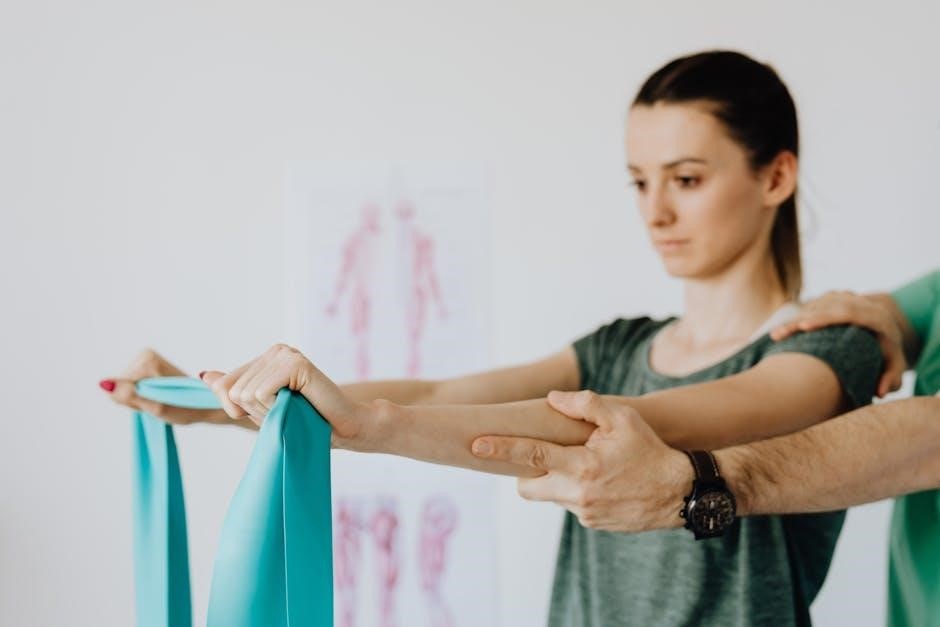
Clamshells are a highly effective exercise for isolating and strengthening the gluteus medius, a crucial muscle for hip stability and preventing inward knee collapse during activity. This targeted strengthening directly addresses a common biomechanical issue contributing to IT band syndrome.
To perform clamshells, lie on your side with your knees bent at a 45-degree angle and your feet stacked. Keeping your feet together, slowly lift your top knee, maintaining a controlled movement and focusing on squeezing your gluteal muscles.
Avoid arching your back or rotating your pelvis during the exercise. Perform 2-3 sets of 15-20 repetitions on each side, gradually increasing resistance with a resistance band as strength improves. Consistent practice builds gluteal strength, supporting proper alignment.
Glute Bridges
Glute bridges are a foundational exercise for strengthening the gluteus maximus, another key muscle group supporting hip extension and external rotation – vital for IT band health. Strong glutes help control lower limb movement, reducing stress on the IT band and knee joint.
To execute a glute bridge, lie on your back with your knees bent and feet flat on the floor, hip-width apart. Engage your core and squeeze your glutes to lift your hips off the ground, forming a straight line from your shoulders to your knees.
Hold briefly at the top, then slowly lower back down. Aim for 2-3 sets of 12-15 repetitions. Adding a resistance band around your thighs increases the challenge and further activates the gluteal muscles, promoting stability.
Hip Abductor Strengthening
Strengthening hip abductors – muscles responsible for moving your leg away from the midline – is crucial for stabilizing the pelvis and controlling lower limb mechanics, directly impacting IT band function. Weak hip abductors can lead to altered movement patterns, increasing stress on the IT band.
Exercises like side leg raises and banded walks effectively target these muscles. Side leg raises involve lying on your side and lifting your top leg, keeping it straight and controlled. Banded walks utilize a resistance band around the ankles or thighs, requiring you to step sideways while maintaining tension.
Focus on proper form, engaging the glutes and maintaining a stable core throughout each exercise. Aim for 2-3 sets of 15-20 repetitions for each exercise, gradually increasing resistance as you gain strength.
Side Leg Raises
Side leg raises are a foundational exercise for strengthening the hip abductors, vital muscles for pelvic stability and proper lower limb alignment, directly influencing IT band health. Performing this exercise correctly minimizes stress on the IT band and promotes balanced muscle function.
To execute, lie on your side with legs extended and stacked. Keeping your top leg straight, slowly lift it towards the ceiling, engaging your outer hip muscles. Avoid rotating your hip or leaning forward/backward; maintain a stable core throughout the movement.
Complete 2-3 sets of 15-20 repetitions on each leg. For increased challenge, consider adding an ankle weight or resistance band around your thighs. Focus on controlled movements, prioritizing quality over quantity.
Banded Walks
Banded walks are an excellent exercise to strengthen the hip abductors – gluteus medius and minimus – crucial for stabilizing the pelvis during movement and preventing excessive inward knee motion, a common contributor to IT band syndrome. This exercise directly addresses imbalances that can strain the IT band.
To perform, place a resistance band around your ankles or just above your knees. Maintain a slight bend in your knees and keep your core engaged. Step sideways, keeping tension on the band throughout the movement. Focus on controlled steps, avoiding letting your knees cave inward.
Aim for 2-3 sets of 15-20 steps in each direction. Adjust the band resistance to match your strength level. Prioritize maintaining proper form over taking large steps; quality is paramount.
Warm-up and Cool-down Routines
Proper warm-ups and cool-downs are essential for injury prevention, especially for runners and cyclists, preparing muscles and tendons for activity and recovery.
Importance of Warming Up Before Exercise
A thorough warm-up is paramount before any physical activity, particularly for those prone to IT band syndrome. Warming up increases blood flow to the muscles, enhancing their elasticity and reducing the risk of strains or tears. It prepares the IT band and surrounding tissues – glutes, quads, and hamstrings – for the demands of exercise.
Dynamic stretches, like leg swings and torso twists, are more beneficial than static stretches before a workout. These movements mimic the actions of the exercise, further preparing the muscles. Neglecting a warm-up can lead to muscle stiffness and decreased performance, increasing susceptibility to ITBS. Prioritizing a proper warm-up is a proactive step towards a pain-free and effective workout, safeguarding your body from potential injury and optimizing athletic performance.
Cool-down Stretches Post-Exercise
A dedicated cool-down is just as crucial as warming up, aiding in muscle recovery and reducing post-exercise soreness. Static stretches, held for 20-30 seconds, are ideal during a cool-down, allowing the IT band and surrounding muscles to lengthen and relax. Focusing on stretches targeting the glutes, hamstrings, quads, and calves complements IT band stretches, promoting overall flexibility and preventing tightness.
Post-exercise stretching helps restore muscles to their pre-exercise length, improving range of motion and reducing the risk of future injury. It also aids in flushing out metabolic waste products, accelerating recovery. Incorporating a consistent cool-down routine, including IT band-specific stretches, is a vital component of a comprehensive fitness regimen, supporting long-term musculoskeletal health and performance.

Recovery and Rehabilitation Timeline
IT band syndrome typically requires a month or two to resolve with consistent home therapy, including targeted exercises and stretches for optimal healing.
Expected Recovery Duration
The recovery timeline for IT band syndrome varies significantly depending on the severity of the condition and individual adherence to a rehabilitation program. Generally, individuals can anticipate a recovery period ranging from one to two months with consistent effort.
Initial stages focus on reducing inflammation and pain through rest, ice, and potentially anti-inflammatory medications. As pain subsides, a progressive return to activity is implemented, incorporating stretching and strengthening exercises.
Consistent performance of prescribed stretches, like those targeting the IT band, piriformis, and calf muscles, is crucial for restoring flexibility and preventing recurrence. Strengthening exercises for the glutes and hip abductors are equally important for providing support and stability.
Full recovery involves a gradual increase in activity levels, ensuring no pain is experienced during or after exercise. Patience and adherence to the rehabilitation plan are key to a successful outcome.
When to Seek Professional Help
Consult a healthcare professional if your IT band pain is severe, persistent, or doesn’t improve with initial self-care measures like rest and ice. Ignoring persistent pain can lead to chronic issues and hinder your recovery process.
Seek evaluation if you experience significant swelling, instability, or locking in the knee joint, as these symptoms may indicate a more serious underlying problem requiring specialized treatment.
A physical therapist can provide a comprehensive assessment, diagnose the cause of your ITBS, and develop a tailored rehabilitation program including specific stretches and strengthening exercises.
Professional guidance is particularly beneficial if you’re unsure about proper exercise technique or if your symptoms worsen despite following a home exercise program. Don’t hesitate to seek expert advice for optimal recovery.
Preventative Measures for ITBS
Prioritize proper running form, consistent warm-ups, and cool-downs to minimize ITBS risk; appropriate footwear also plays a crucial role in injury prevention.
Proper Running Form
Maintaining correct running form is paramount in preventing IT Band Syndrome. Avoid overstriding, as this increases stress on the IT band and knee joint. Focus on shorter, quicker strides, landing midfoot rather than heel striking, which reduces impact forces.
Cadence is also crucial; aim for around 170-180 steps per minute to promote efficient movement and minimize strain. Keep your knees pointing forward, not collapsing inward, and maintain a slight bend in your knees throughout the stride.
Engage your core muscles to stabilize your pelvis and prevent excessive rotation. A strong core supports proper alignment and reduces compensatory movements that can contribute to ITBS. Consider a gait analysis by a professional to identify and correct any biomechanical issues.
Appropriate Footwear
Selecting the right running shoes is essential for preventing IT Band Syndrome. Ill-fitting or worn-out shoes can alter your biomechanics and increase stress on the IT band. Seek shoes that provide adequate cushioning and support, tailored to your foot type and running style.
Consider getting professionally fitted at a running specialty store; experts can analyze your gait and recommend shoes that address your specific needs. Replace your running shoes every 300-500 miles, or when the cushioning begins to break down.
Avoid shoes with excessive pronation control if you have a neutral gait, as this can restrict natural movement. Orthotics may be beneficial if you have structural imbalances, but consult a podiatrist or physical therapist for guidance.